
This is the second post of a 3-part series in which I will attempt to share some insights on how to plan meals. Planning for meals is a way to be more frugal, efficient and organized about something that takes place every day in your home. When I started thinking about doing a post on meal planning, I realized that there are some background topics that go into my meal planning, so I wanted to be sure to include those. Hope you enjoy this series and maybe even learn something along the way.
If you missed my first post in this series, go ahead and click here for how to stock your pantry.
First off, I have to say that I LOVE grocery shopping! I know some people don't, but it's a necessity for most of us, so here are a few tips for you that will hopefully help in making your shopping experience more budget-friendly and maybe even a bit more enjoyable.
 |
| source |
First off, I have to say that I LOVE grocery shopping! I know some people don't, but it's a necessity for most of us, so here are a few tips for you that will hopefully help in making your shopping experience more budget-friendly and maybe even a bit more enjoyable.
1. Read the Weekly Store Ads
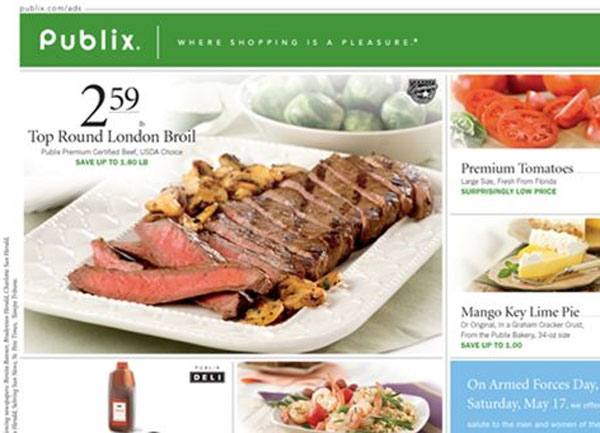
Call me old-fashioned, a dork, or whatever you will, but I love to read all of the grocery store fliers that come in the mail. Whether or not that truly is an oddity, it is one of the first steps to being a frugal shopper. The deals at the grocery store are generally how I determine what to buy that week. Unless it's an absolute necessity, I won't buy something unless it's on sale. Comparing each store's deals is also helpful in knowing where to buy what that week. It might mean driving around town a bit, but if something is less expensive at Kroger one week, I will go there instead of Publix. Yes, this does take some time, but in the end it's worth saving quite a bit of money and getting the biggest 'bang for your buck'.
2. Take Stock of your Kitchen
After browsing the ads and taking note of what's on sale, look through your pantry, fridge, and freezer to determine what is needed. Undoubtedly there are certain items that you will buy each week, but there are also staple items that may need restocking. I haven't ever done this, but it's a great idea to keep a running list on your fridge, or maybe make a chalkboard sign to hang inside of your pantry (this is my plan) so that when you run out of something, you can write it down. This would save time and help you know exactly what is lacking.
3. Make a List
We've all done it before, wandering around the grocery store with our mouths watering, sweeping the shelves of everything that looks appealing. This really is fun, but when you go to pay, you'll be forking over a lot more green than if you had made a list and purchased those items. A little bit of planning will go a long way in helping your budget.
4. Gather Your Coupons
You don't have to be an 'extreme' coupon expert to save some money by using coupons. It's as easy as buying a Sunday paper to have coupons to utilize each week. There are TONS of websites out there to help match the coupons with the deals in the stores. I will not even attempt to come close to the experts on this, so instead here are some great websites for help in being a savvy couponer.
The one I use is The Grocery Game. I like this because the deals are matched up with a specific store, and it tells me what percentage I'll be saving on each item. It's not a free service, but I just add the price (charge per store, on an 8 week cycle) to my grocery budget. On several occasions I have saved more than I spent using this system, so that works for me! There is a free 8-week trial, so try it out for awhile, and if you're satisfied you can join.
*I will say when I lived in CA, this didn't always work for me; often the list didn't match my actual stores. Since moving to GA, though, I've had more success than failure.*
Southern Savers is another excellent resource to use, although, just like the name, it's specific to the South. This is a free site.
Grocery Smarts covers primarily the West, so if you're in that area, this would be a great one for you, and this is also free. There are even workshops that you can attend to learn how to make the most of the information offered.
There are MANY more sites like this; just google coupon sites and you'll find a ton!
5. Look for Manager's Specials
Generally, sticking to your list is a good rule of thumb. However, there are many 'manager's specials' in most stores. I always browse the meat department and usually come out with some awesome meat deals to stick in the freezer. Sometimes I'll find a cut of meat that I don't normally buy, and I have no idea how I'm going to cook it! But, if it is marked down really well, I'll stick it in the freezer and google a way to make it later on. This has helped to save money AND to learn how to cook some new things! Stores also have specials on other items, so as long as you can use it within in the "Use By" date, you're golden!
I hope these few tips are helpful to you as you try to be a better grocery shopper!
Do you enjoy or endure grocery shopping?
Do you have a favorite coupon website?
 |
| source |
Call me old-fashioned, a dork, or whatever you will, but I love to read all of the grocery store fliers that come in the mail. Whether or not that truly is an oddity, it is one of the first steps to being a frugal shopper. The deals at the grocery store are generally how I determine what to buy that week. Unless it's an absolute necessity, I won't buy something unless it's on sale. Comparing each store's deals is also helpful in knowing where to buy what that week. It might mean driving around town a bit, but if something is less expensive at Kroger one week, I will go there instead of Publix. Yes, this does take some time, but in the end it's worth saving quite a bit of money and getting the biggest 'bang for your buck'.
2. Take Stock of your Kitchen
 |
| source |
After browsing the ads and taking note of what's on sale, look through your pantry, fridge, and freezer to determine what is needed. Undoubtedly there are certain items that you will buy each week, but there are also staple items that may need restocking. I haven't ever done this, but it's a great idea to keep a running list on your fridge, or maybe make a chalkboard sign to hang inside of your pantry (this is my plan) so that when you run out of something, you can write it down. This would save time and help you know exactly what is lacking.
3. Make a List
 |
| source |
4. Gather Your Coupons
 |
| source |
The one I use is The Grocery Game. I like this because the deals are matched up with a specific store, and it tells me what percentage I'll be saving on each item. It's not a free service, but I just add the price (charge per store, on an 8 week cycle) to my grocery budget. On several occasions I have saved more than I spent using this system, so that works for me! There is a free 8-week trial, so try it out for awhile, and if you're satisfied you can join.
*I will say when I lived in CA, this didn't always work for me; often the list didn't match my actual stores. Since moving to GA, though, I've had more success than failure.*
Southern Savers is another excellent resource to use, although, just like the name, it's specific to the South. This is a free site.
Grocery Smarts covers primarily the West, so if you're in that area, this would be a great one for you, and this is also free. There are even workshops that you can attend to learn how to make the most of the information offered.
There are MANY more sites like this; just google coupon sites and you'll find a ton!
5. Look for Manager's Specials
Generally, sticking to your list is a good rule of thumb. However, there are many 'manager's specials' in most stores. I always browse the meat department and usually come out with some awesome meat deals to stick in the freezer. Sometimes I'll find a cut of meat that I don't normally buy, and I have no idea how I'm going to cook it! But, if it is marked down really well, I'll stick it in the freezer and google a way to make it later on. This has helped to save money AND to learn how to cook some new things! Stores also have specials on other items, so as long as you can use it within in the "Use By" date, you're golden!
I hope these few tips are helpful to you as you try to be a better grocery shopper!
Do you enjoy or endure grocery shopping?
Do you have a favorite coupon website?


